
.png)
When Access Points Close, the System Feels It
Written by Carly Newman, Operations Director, 360 Quality Care + Transport Services
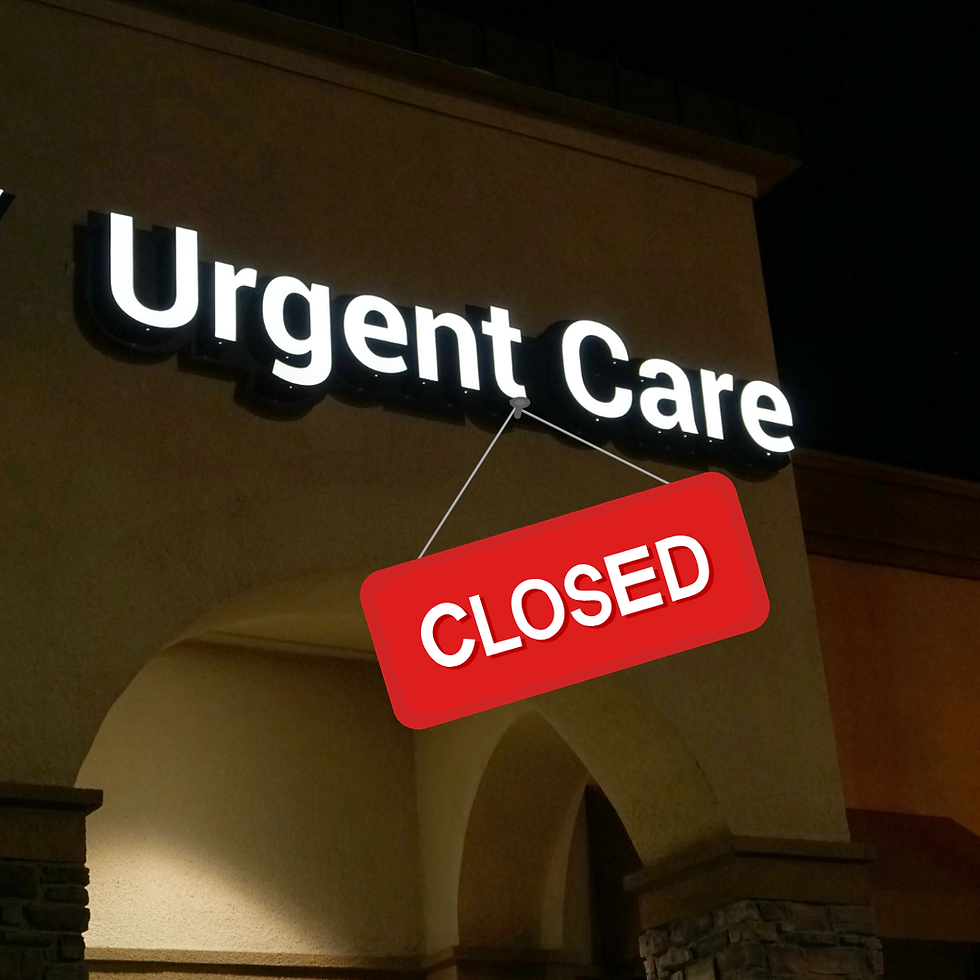
I found myself unsettled reading about the recent closures by Total Access Urgent Care. Not because a business made a tough decision—that happens—but because of what those closures say about how our system is actually functioning.
Urgent care, in my mind, has always represented one of the smartest pressure-release valves we have in healthcare. It sits in that middle ground—more accessible and far less expensive than an emergency room, but more immediate and responsive than primary care. It’s where a lot of people should go. And yet, even with that value, even with strong brand recognition and quality delivery, some of these locations just didn’t draw enough volume to sustain themselves.
That’s not a demand problem. That’s a system problem.
People don’t make healthcare decisions the way we think they should. They don’t sit there weighing cost efficiency or system impact. In the moment, they go with what feels certain. The emergency room is always open. EMS always shows up. The hospital is the default. Urgent care, even when it’s the better option, requires just a little more awareness, a little more direction, and often a little more coordination. And if that’s not built into the system around it, it loses—even when it’s right.
I can’t help but see the parallel to what we do every day at 360. In a lot of ways, urgent care is to the emergency room what we are to unnecessary EMS transport. We both sit in that space of doing what’s appropriate, not excessive. We both help reduce strain on the most expensive parts of the system. And we both depend on a level of coordination and decision-making that doesn’t always happen naturally.
Because here’s the truth that doesn’t get talked about enough—transportation often decides where care happens. If it’s easier to call 911 than it is to coordinate a ride to urgent care, the patient goes to the ER. If a facility doesn’t have confidence in a transport solution, they default to EMS. Not because it’s better, but because it’s certain.
And that’s where this becomes more than just an urgent care story.
These closures are a signal. Not that urgent care doesn’t work—but that the system doesn’t always support the things that do work. The incentives don’t always line up. The pathways aren’t always clear. And the solutions that are more efficient and more appropriate still have to fight to prove themselves every day.
That should matter to us.
Because we operate in that same space. We are part of that same layer of the system that helps it function better—when it’s allowed to. And moments like this aren’t a reason to pull back. If anything, they’re a reason to lean in harder.
There’s an opportunity here to align more closely with urgent care providers, to support them operationally, to help remove friction where we can. There’s an opportunity to be more vocal in how care should actually flow—when urgent care makes sense, when EMS is necessary, when there’s a better way in between. And there’s an opportunity to elevate the conversation around this middle tier of healthcare that too often gets overlooked, even though it’s doing some of the most important work.
I don’t see this as a failure. I see it as a gap.
And if we’re paying attention, it’s a gap we’re in a position to help close.
Author, Carly Newman, Operations Director, 360 Quality Care + Transport Services
Carly Newman serves as Operations Director at 360 Quality Care + Transport Services, where she leads daily operations across a high-touch, patient-centered transportation model in the St. Louis region. She works closely with care managers, social workers, and discharge teams to support institutional partnerships and ensure patients move through the system safely, reliably, and without unnecessary friction.
Known for her responsiveness and accountability, Carly plays a key role in aligning operations with patient and partner needs—helping make transportation a seamless extension of the care team.
She is also the daughter of Stephen Newman, President of 360 Quality Care + Transport Services, whose national thought leadership has helped shape the conversation around quality and accountability in patient transportation.


Comments